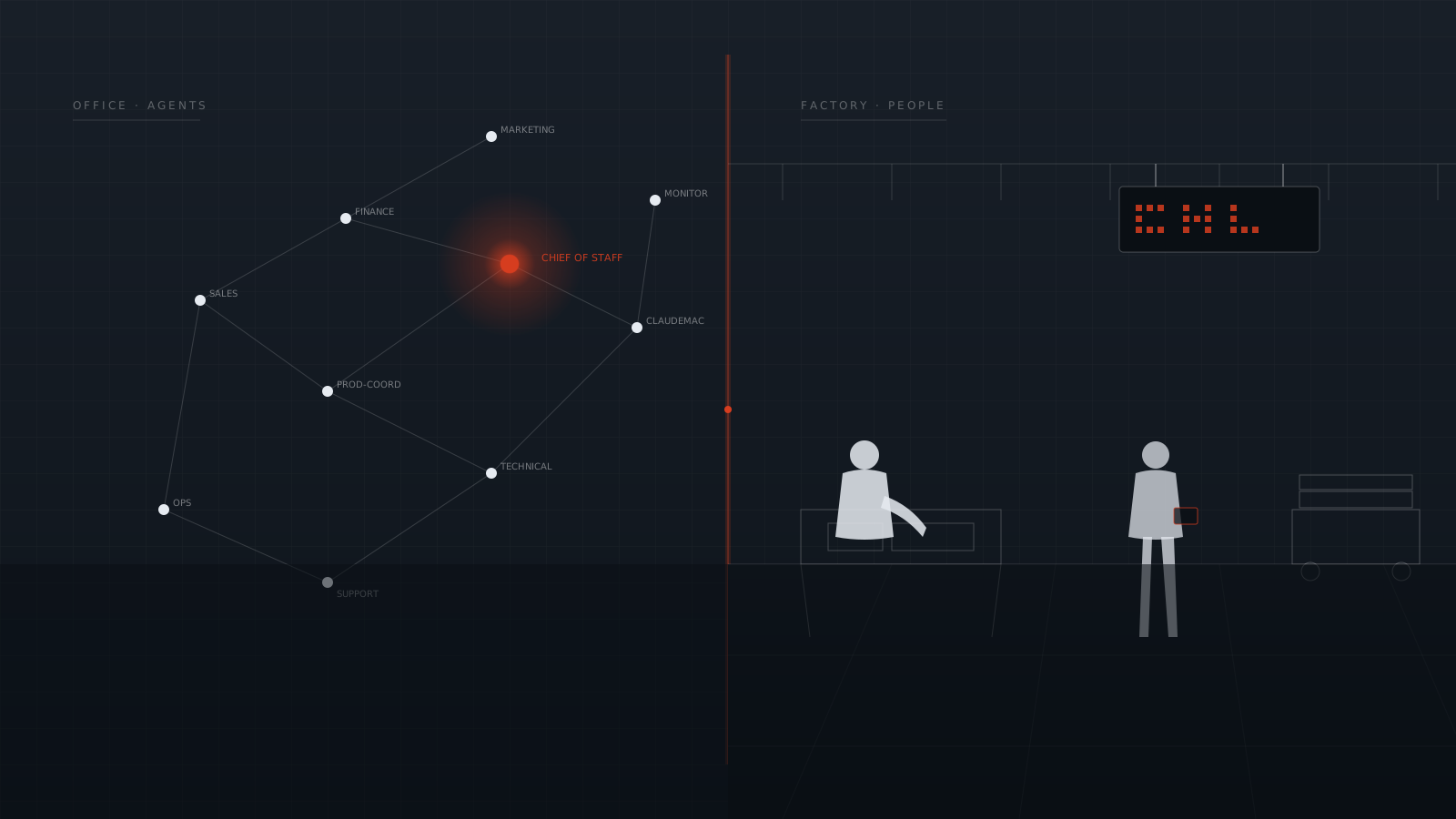
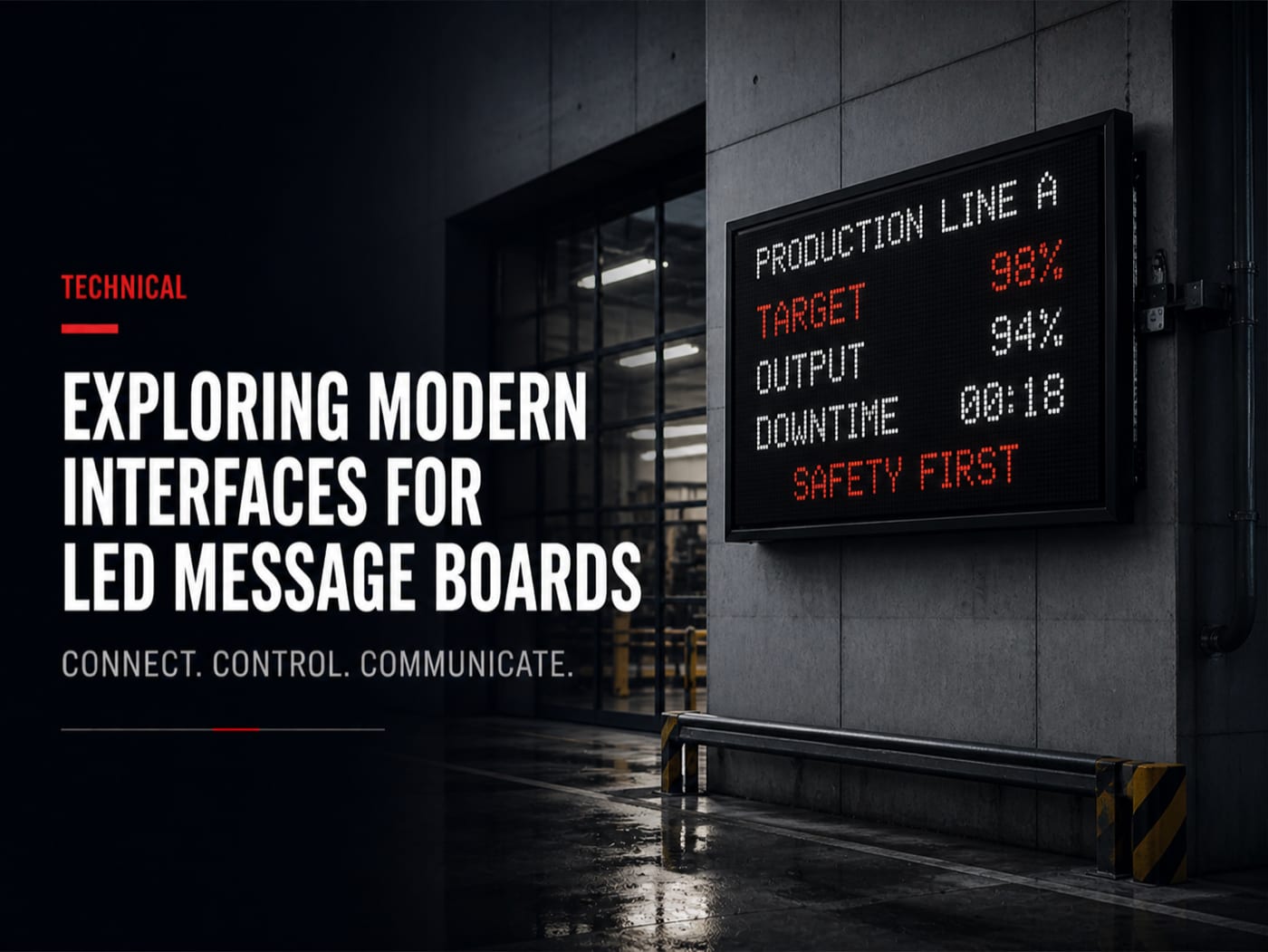
Most rugged outdoor LED displays still rely on Modbus/RS485 — a serial communication standard from the 1970s. While serviceable for simple on/off signals, it imposes hard limits on what a display can show dynamically and how it connects to modern IT infrastructure. Ampron's LED message boards use REST HTTP instead, the same protocol that underpins modern web applications and APIs.
For engineers working with SCADA or MES systems, this distinction matters. A web-based thin client can push structured messages to an Ampron display using a standard HTTP POST request — no COM ports, no adapter hardware, no custom drivers. The display receives JSON-formatted content and renders it immediately. That integration path looks identical whether you're pushing from a browser, a PLC with an Ethernet card, or a backend application server.
REST also makes multi-display management straightforward. Each display has a unique IP address and responds to the same API endpoints. Sending a message to 40 displays at a gate checkpoint means making 40 identical HTTP POST calls — or one batch call if using the central management endpoint. State can be polled or pushed, and the same API that writes content can also read back display health, temperature and uptime.
This approach avoids the accumulation of proprietary middleware that complicates legacy display deployments. There is no closed protocol layer between your system and the screen. Ampron publishes its full API documentation at ampron.eu/api — operators and integrators can test against it before committing to hardware.
For manufacturing environments specifically, REST integration means production KPI data from an ERP or MES can flow to floor-mounted displays on the same network path used for every other business application. No separate cabling run, no RS485 converter box at every display — just Ethernet and HTTP.