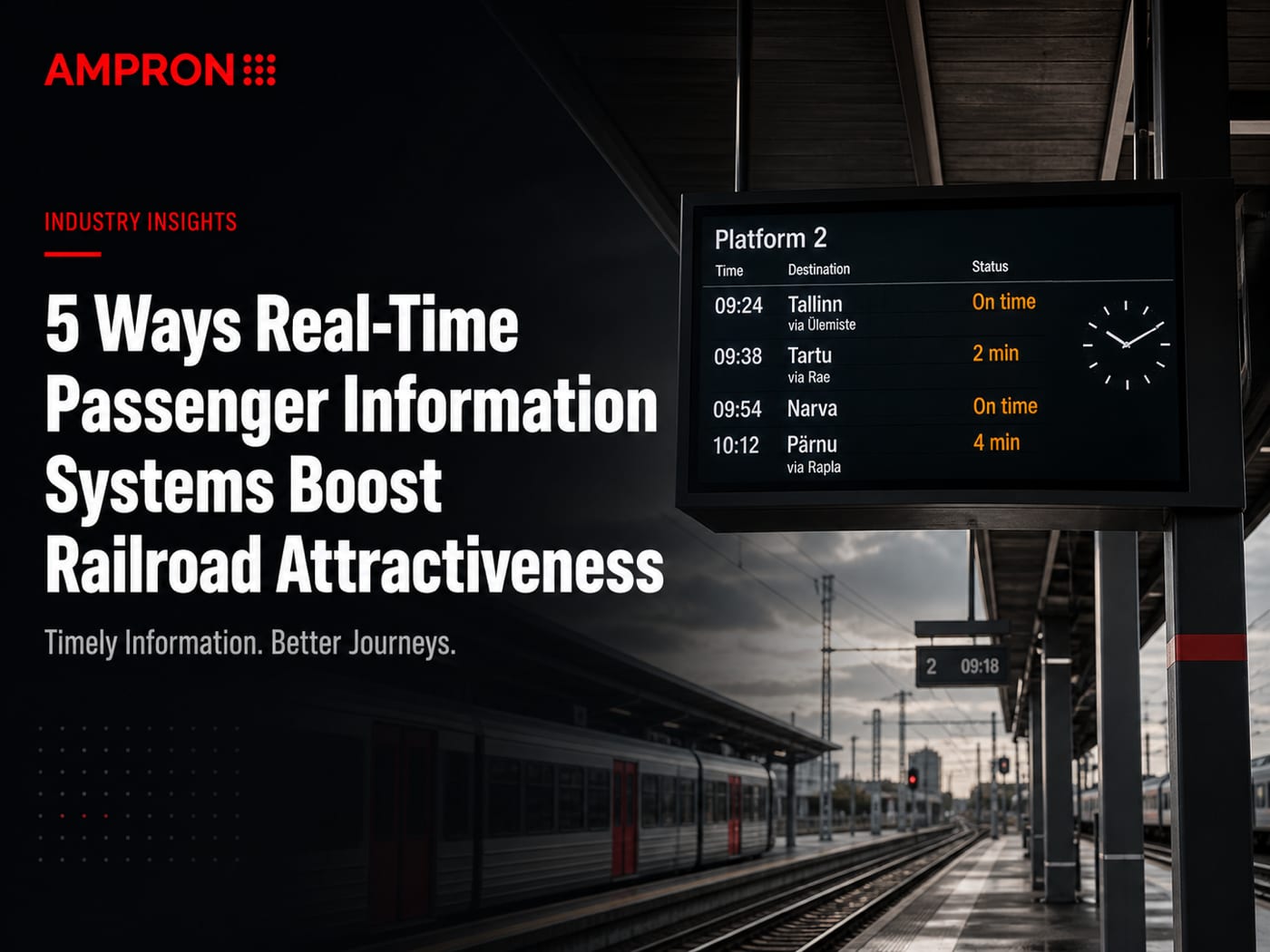
Real-time passenger information systems play a critical role in improving the commuting experience by giving commuters accurate and current information regarding train timetables, platform assignments, and any potential delays. Passengers are better equipped to plan their journeys because of this degree of transparency.
Clear and consistent real-time information significantly reduces passenger anxiety at railway stations. When people know their train is running on time, or are informed about a delay with a realistic alternative, the overall experience becomes manageable. This reduces platform crowding and improves boarding efficiency.
Modern real-time displays integrate directly with train management and timetable systems via REST API — meaning updates flow automatically from the operational backend to the physical display without manual intervention. For railway operators, this simplifies the information chain and reduces the risk of out-of-date information reaching passengers.
EN 50121-4 electromagnetic compatibility certification is a regulatory requirement for displays installed in railway environments near electrified track. Ampron's LCD railway series carries this certification, covering indoor single-sided, outdoor weatherproof and dual-sided pole configurations — making procurement and compliance straightforward for railway operators.