A truck arrives at a weighing station. It needs to know its weight result and its assigned unloading zone before it drives forward. Historically, this has meant a weighbridge operator watching a screen, picking up a radio, and calling the bay number through to the driver. At high-throughput sites — bulk cargo ports, aggregates terminals, waste transfer stations — this creates a bottleneck: the next truck cannot move until the radio exchange is complete.
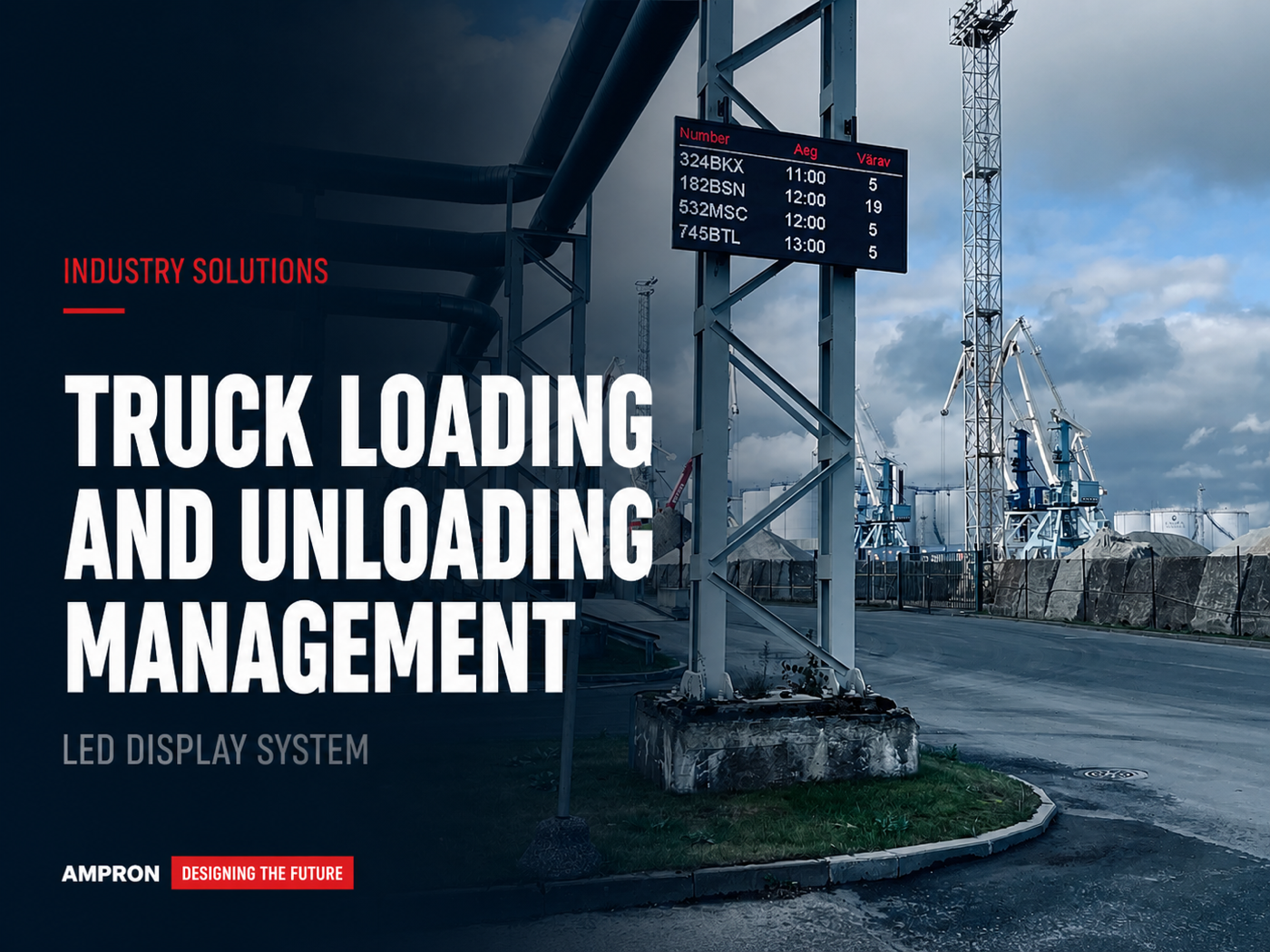
The alternative is a guidance display mounted at the exit of the weighbridge lane: as the truck rolls off the scale, a number and direction appear automatically. The weighing event triggers the display, no operator involvement required.
Connecting those two systems — the weighbridge management platform and the display — is the part that most operations managers assume will take weeks and require specialist integration work. In practice, with the right display hardware, it takes an afternoon.
How the integration works
Ampron displays have an HTTP API built into the controller. Any system that can make an HTTP request can update the display. The full integration for a weighbridge application looks like this: when a weighing event is recorded, the weighbridge management system sends a single HTTP POST request to the display's IP address. The request body contains the weight result, the assigned bay number, and optionally a directional instruction. The display updates immediately.
There is no display management server to install. There is no proprietary driver or SDK. There is no dedicated hardware controller between the weighbridge system and the display. The display is a device on the local network, the weighbridge system is a client making HTTP calls, and the network is the integration layer.
Port of Kunda: Waybiller to Ampron in one afternoon
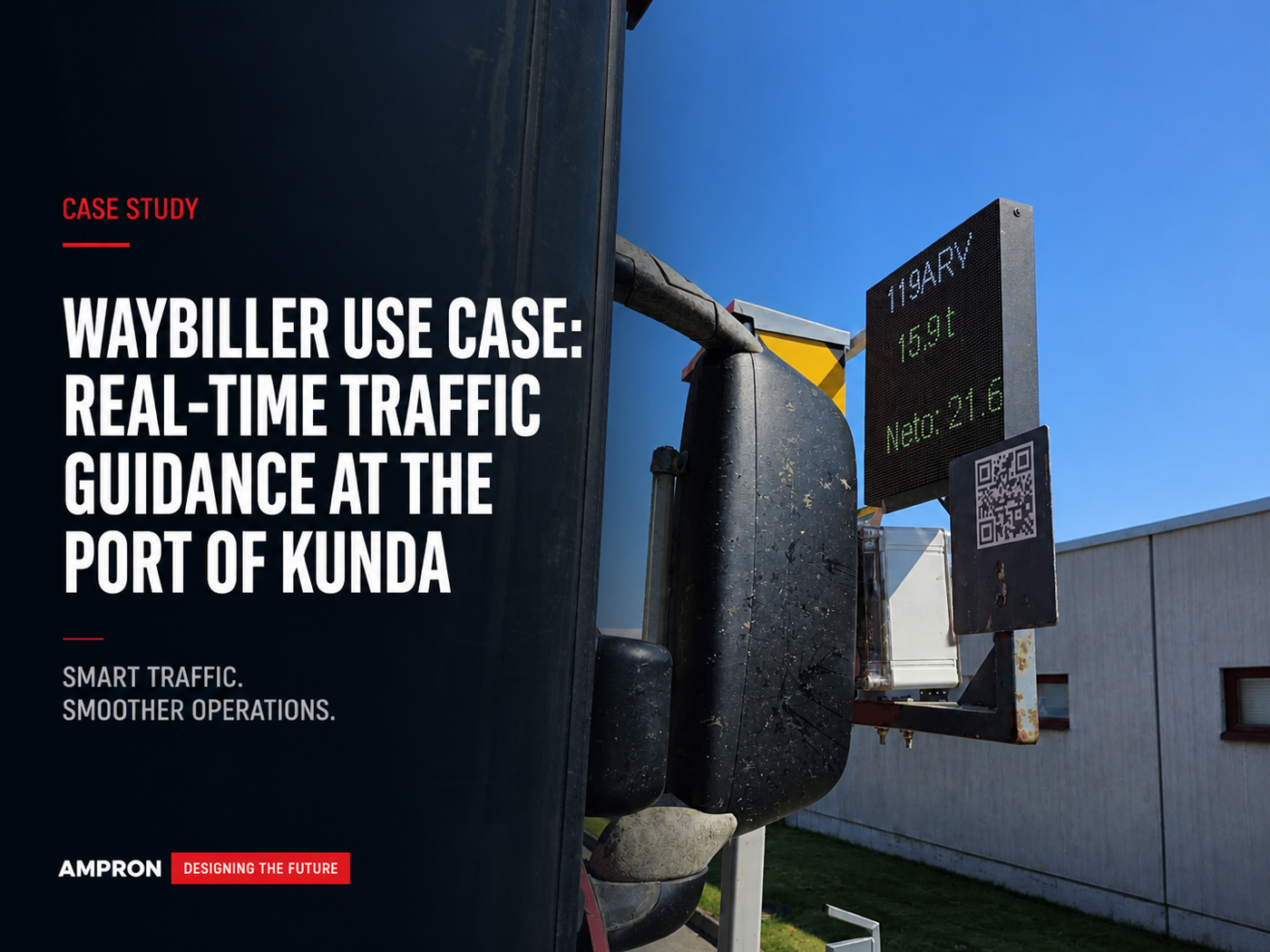
Waybiller is a transport management platform used by bulk cargo operators across the Baltic region. When Port of Kunda needed to automate their weighbridge guidance — trucks carrying bulk cargo needed to know weight and bay without radio contact — the integration requirement was straightforward: every weighing event in Waybiller triggers an HTTP call to the Ampron DS Series display installed at the weighbridge exit.
The integration was completed in a single afternoon by the Waybiller development team. The HTTP API documentation is public at ampron.eu/api. There was no onboarding process, no SDK to evaluate, and no Ampron-side involvement required beyond providing the hardware and documentation.
The result: every truck clears the weighbridge in roughly half the time compared to the radio-dispatch workflow. At a site processing several hundred truck movements per day, that compounds into meaningful throughput improvement over a shift.
What the display needs to be
A weighbridge guidance display is not an office display. It sits outdoors, at a lane exit, exposed to weather and to vehicles that will occasionally get closer than planned. The hardware requirements are IP65 minimum, operating range down to −35 °C for northern European sites, and high brightness — a display that is readable in direct summer sunlight, not just under cloud cover.
The DS Series used at Port of Kunda is rated to those conditions. The integration API is identical across the DR and DS series, so the same software integration works whether the site needs a smaller text display or a larger LED board for a different viewing distance.
Extending the integration
The same pattern applies to other triggered-display use cases at logistics sites: barrier control displays that show truck registration plates, bay assignment boards inside warehouses, and loading dock number panels. Each update is one HTTP call. The display hardware and API are the same across use cases; the triggering system changes.
If your weighbridge management system can make an HTTP request — and every system built in the last decade can — the integration is a few hours of development work, not a project.